Chiropractic Techniques
Dr David Chapman (Chiropractor) selects the most appropriate technique for each individual patient at every visit. He draws on five specific techniques at Centrepoint Chiropractic Clinic — each chosen based on the individual patient's presentation, preference and clinical needs. Patients are encouraged to discuss their preferences with Dr David Chapman (Chiropractor) during their consultation.
Diversified Spinal Adjusting
The most widely used and extensively researched form of chiropractic adjustment, Diversified technique involves a precise, high-velocity, low-amplitude manual thrust applied to specific joints of the spine or extremities. The aim is to restore normal range of motion, improve joint function and reduce nerve irritation.
Dr David Chapman (Chiropractor) applies the thrust with carefully controlled force and direction — the technique is highly specific to each joint and each patient. Diversified adjusting may produce an audible sound as gas is released from the joint, which is a normal and harmless part of the process.
This technique is suitable for a wide range of patients presenting with spinal and musculoskeletal conditions.
Sacro Occipital Technique (SOT)
Sacro Occipital Technique was developed in 1925 by Dr Major Bertrand DeJarnette, a chiropractor and engineer who combined chiropractic and osteopathic principles into a comprehensive, indicator-based system. SOT takes its name from the relationship between the sacrum at the base of the spine and the occiput at the base of the skull.
Rather than treating individual joints in isolation, SOT considers the body as a whole system. A structured diagnostic approach classifies each patient into one of three categories based on neurological indicators, allowing treatment to be tailored precisely to what the body requires at each visit. SOT incorporates cranial assessment, pelvic blocking using wedge-shaped supports, and evaluation of the cerebrospinal fluid system.
The technique is notably gentle, making it well suited to children, pregnant women, elderly patients and those who prefer a lower-force approach.
Activator Method
The Activator Method uses a small, hand-held spring-loaded instrument — the Activator Adjusting Instrument — to deliver a precise, controlled, low-force impulse to specific joints of the spine or extremities. Developed in the late 1960s, the Activator Method is one of the most widely researched chiropractic techniques and the only instrument-assisted adjusting technique supported by clinical trials.
Because the instrument delivers its impulse faster than the body's muscles can respond, patients typically experience less involuntary muscle tension during adjustment compared to manual techniques. The result is a gentle, highly targeted treatment that does not require the bending, twisting or high-force thrusting associated with traditional manual adjustment.
The Activator Method is particularly well suited to patients who are elderly, have reduced bone density, have experienced disc injuries, or who feel anxious about manual adjustments.
Trigenics
Trigenics is a neuromuscular assessment and treatment system developed in the early 1980s by Canadian-Estonian chiropractor and osteopath Dr Allan Oolo Austin. Rather than being a purely mechanical or structural approach, Trigenics works on a neurological model — addressing the communication pathways between the brain and the muscles of the body.
The name Trigenics refers to the three techniques that are applied simultaneously during treatment: resistive exercise neurology, muscle nerve-sensor stimulation, and biofeedback breathing. This simultaneous application creates a combined neurological effect considered greater than any single technique applied alone.
During a Trigenics session, Dr David Chapman (Chiropractor) applies specific pressure to muscle nerve sensors whilst the patient simultaneously performs gentle resisted movements and focused breathing — making the patient an active participant in their treatment. Trigenics is gentle and generally well tolerated, with patients typically experiencing little to no post-treatment soreness. Trigenics has been taught to over 2,000 registered practitioners across 25 countries.
Extremity Adjusting
Chiropractic care is not limited to the spine. Joints throughout the body — including the shoulders, elbows, wrists, hands, hips, knees, ankles and feet — can develop the same types of restricted movement and dysfunction that affect spinal joints.
Dr David Chapman (Chiropractor) is trained and experienced in the assessment and adjustment of extremity joints. Extremity adjusting is commonly indicated for conditions such as shoulder pain, rotator cuff dysfunction, tennis elbow, carpal tunnel syndrome, hip pain, knee pain, ankle sprains, plantar fasciitis and repetitive strain injuries arising from work or sporting activities.
Assessment of extremity joints is often included as part of a full body evaluation, as dysfunction in the feet and ankles can influence spinal mechanics and vice versa. Treatment of extremity joints may be performed using manual techniques or the Activator instrument depending on the joint involved and the patient's presentation.
Understanding Your Spine
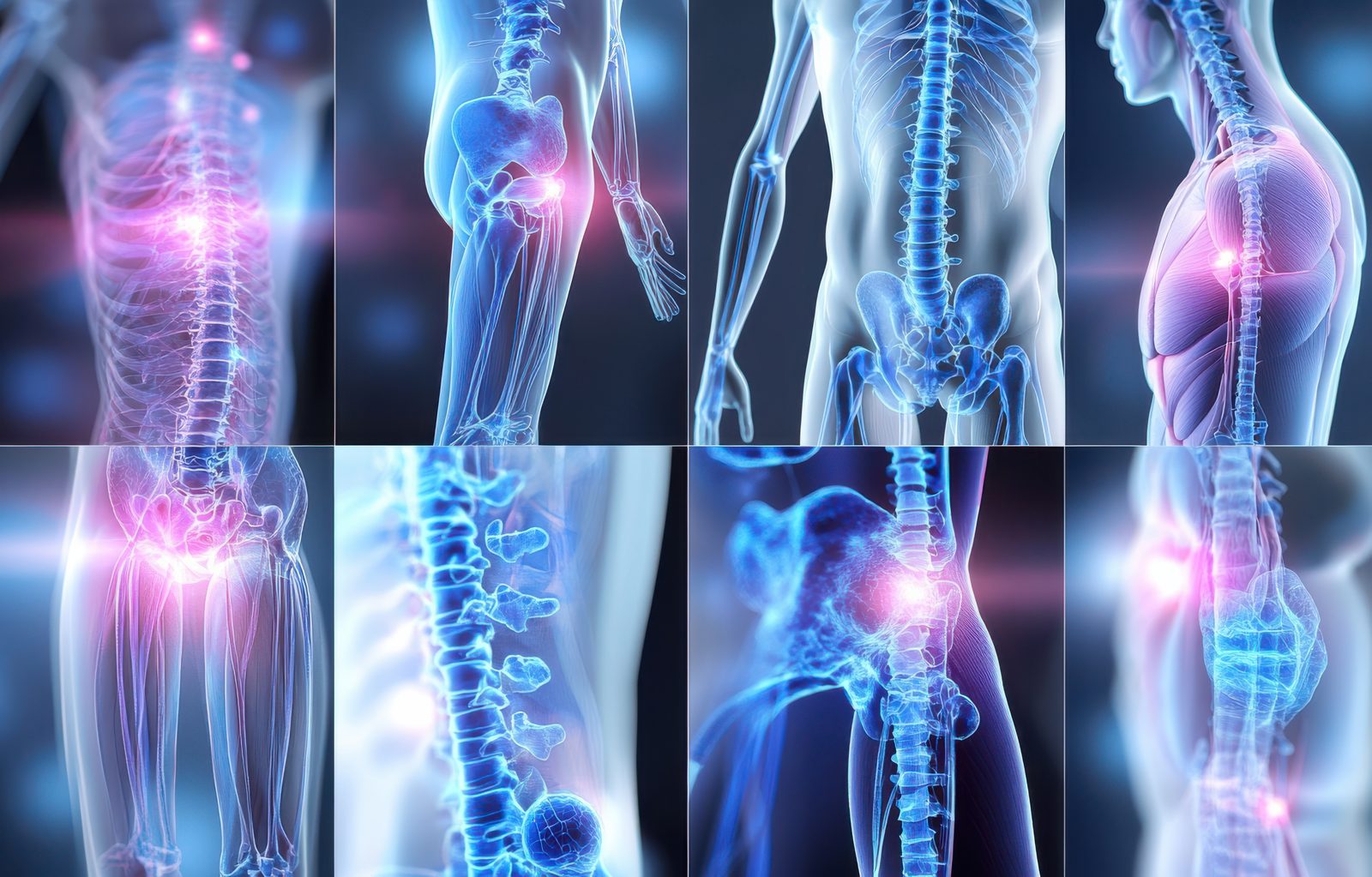
The spine, or vertebral column, is a remarkable structure made up of 33 vertebrae stacked one on top of another. These vertebrae are separated by intervertebral discs that act as shock absorbers, and they are supported by an intricate system of muscles, ligaments and tendons.
Between each pair of vertebrae are small openings called intervertebral foramina, through which nerves branch out to supply the rest of the body. When vertebrae become misaligned — a condition chiropractors call a subluxation — these nerves can become irritated or compressed, leading to pain, reduced function, or other health concerns.
The spine also protects the spinal cord, which carries signals from the brain to the rest of the body. By restoring proper spinal alignment and function, chiropractic care can help facilitate normal nerve function and support your body's natural healing processes.
Which Technique Is Right for You?
The best technique for your situation depends on your individual needs, preferences, and clinical presentation. During your consultation, Dr David Chapman (Chiropractor) will discuss which technique or combination of techniques may be most appropriate for you.
Book Your ConsultationOr call Judy on 07 5495 1763 — Monday to Friday, 9am to 6pm